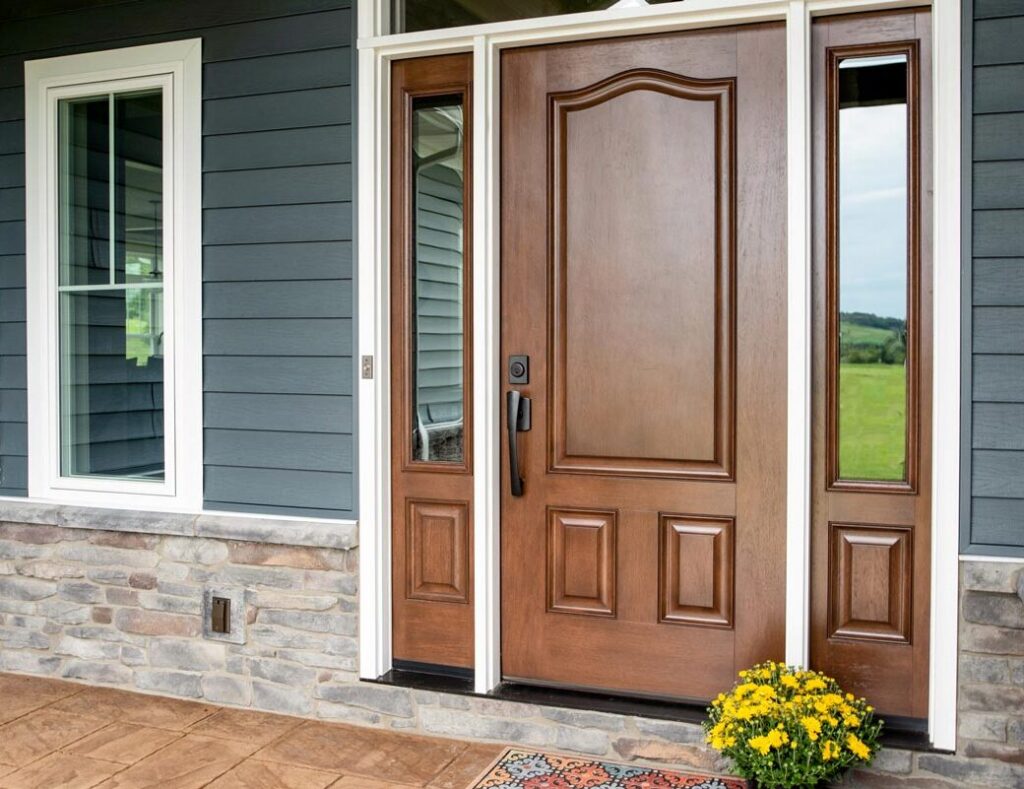
Your front door works harder than almost any other part of your home — and in Portland and Vancouver, it works harder than most. Eight months of rain, wet winters, dry summer heat, and the constant humidity swings that come with living between the Cascades and the coast add up to a level of wear that homeowners in drier climates never deal with.
Most people don't think about their front door until something goes obviously wrong. The trouble is that front doors rarely fail all at once. They decline gradually, and the early signs are easy to write off as quirks. That sticky spot becomes normal. The gap of daylight at the bottom becomes something you stop seeing. Meanwhile, your energy bills creep up, your entry gets less secure, and the eventual repair gets more expensive.
Here are five signs that your door has moved past small fixes and into replacement territory — with the specific issues we see most often across Portland, Vancouver, and Salem.

1. You Can Feel a Draft (or See Daylight) Around the Frame
Stand next to your closed front door during a January east wind and hold your hand a few inches from the perimeter. If you feel moving air along the edges, at the threshold, or around the hinges, air is passing through a seal that should be closed.
Better yet, close the door and turn off the entry light during the day. If you can see a line of daylight anywhere around the frame, you have a gap — and where light passes, so does air, moisture, and the wind-driven rain that defines a Pacific Northwest winter.
Why it happens here. Our humidity swings are hard on seals. Weatherstripping compresses and hardens over time, and the constant wet-dry cycling of PNW seasons accelerates it. Thresholds wear down. Wood doors expand through our long wet season and contract through the dry stretch of August, and after enough cycles they no longer sit flush.
Homes in the Columbia River Gorge wind corridor — East Vancouver, Camas, Troutdale, and the eastern edges of Portland — see this faster than most. Sustained gorge winds don't just make a draft noticeable; they drive rain horizontally into any gap that exists.
When it's a repair. If the weatherstripping is visibly cracked or flattened but the door sits square in the frame, replacing the weatherstripping and adjusting the threshold is a legitimate fix.
When it's a replacement. If you've already replaced weatherstripping once and the draft came back within a year or two, the problem isn't the seal — it's the door or frame. A warped slab or a frame that's shifted out of square will keep defeating new weatherstripping.
2. The Door Sticks, Drags, or Won't Latch Cleanly
You've probably developed a technique. Lift the handle slightly while you push. Shoulder it in November. Pull the door toward you before turning the deadbolt.
Why it happens here. Seasonal swelling is the single most common door complaint we hear in this region, and it's a direct product of our climate. Wood absorbs moisture through the rainy season and expands. A door that operates perfectly in July can bind badly by December — that's not a coincidence, it's our humidity cycle.
The other causes worth distinguishing:
- Loose hinges. Screws back out over time, especially if they never reached the framing stud behind the jamb.
- Foundation movement. Portland and Vancouver have a lot of homes on expansive clay soils, and older Portland housing stock — the Craftsman and bungalow inventory across Southeast, North Portland, and Vancouver's older neighborhoods — has had a century of seasonal soil movement to shift frames out of square.
- Warped slab. Common on solid wood doors with a south or west exposure. Our summer sun on one face and conditioned air on the other creates a temperature and moisture differential that bows the slab.
When it's a repair. Loose hinges are a genuine quick fix. Minor seasonal swelling can sometimes be planed, though that's a one-way decision — plane it to fit in February and you may have a gap by August.
When it's a replacement. A warped slab cannot be un-warped. If the frame has gone significantly out of square, or you've already planed and it's binding again, you're past repair. And a door that won't latch cleanly is a security problem — a partially seated latch can be forced with far less effort than a properly engaged one.
3. You See Visible Damage — Rot, Rust, Cracks, or Delamination
This is the sign that matters most in our climate, and it's the one most often caught too late.
Rot is the Pacific Northwest's defining door problem. Roughly 36 to 45 inches of annual rainfall across the Portland-Vancouver metro, concentrated in a long cool wet season, means wood doors and frames spend months at a time with limited opportunity to dry out. Add the tree cover and north-facing exposures common across the region and you get conditions where moisture sits.
Walk outside and check your door in good light:
On wood doors, press a thumbnail into the wood near the bottom of the door and around the base of the frame. If it gives, that's rot. Look for splitting where stiles and rails meet. Peeling or bubbling paint usually means moisture underneath.
Check the bottom edge and the threshold. This is where water sits and where damage starts — and it's the part almost nobody inspects. In our climate, it's where you'll find the problem first.
Look for moss or algae growth on the door face or in the frame joints. If moss is establishing on your entry, that area is staying wet long enough to support it, and the wood underneath is doing the same.
On steel doors, surface rust on a scratch can be sanded and repainted. Rust that has eaten through the skin is structural — once compromised, the insulating foam core starts absorbing moisture and the door loses both insulation value and rigidity.
On fiberglass doors, look for delamination and cracks around hardware. Fiberglass handles our climate better than most materials, which is a large part of why we recommend it here.
When it's a replacement. Rot deeper than the surface. Rust through the skin. Cracks through the slab. Any damage to the frame itself.
The reason to act early is that water intrusion doesn't stay put. What starts as a replaceable door becomes a threshold repair, then a subfloor repair, then framing. In a climate this wet, that progression happens faster than homeowners expect.
4. Your Energy Bills Have Climbed Without a Clear Explanation
If your heating costs have risen year over year without a change in usage, the building envelope is worth examining. Doors and windows are the usual suspects because they have moving components and seals that degrade.
Why an old door leaks energy here. Our climate puts specific pressure on entry doors:
- Long heating season. Portland and Vancouver run heating loads from roughly October through May. That's more than half the year during which every gap around your door is costing you.
- Growing cooling load. Summer heat events have made cooling a real factor in this region in a way it wasn't twenty years ago. Homes built for mild summers now run AC in July and August, and a leaky door works against you in both directions.
- Poor insulation value in older doors. A solid wood door — often assumed to be the premium option — has a relatively modest R-value. Older hollow-core or thin steel doors are worse. Modern insulated fiberglass and steel doors use polyurethane cores that substantially outperform older construction.
- Single-pane decorative glass. Common in Portland's older housing stock and a significant weak point. Modern equivalents use insulated glass with low-E coatings.
Worth checking: Energy Trust of Oregon and Clark Public Utilities both offer resources for homeowners looking at envelope improvements, and it's worth seeing what applies to your situation before you buy.
5. The Door No Longer Meets Your Security or Style Needs
The first four signs are about failure. This one is about fit — and it's just as legitimate a reason to replace.
On security. A front door is only as strong as its weakest component:
- Hollow-core or thin panel construction that can be kicked through regardless of the lock.
- Short strike plate screws. The standard three-quarter-inch screws that ship with most locksets anchor into jamb trim, not framing. Longer screws that reach the stud dramatically increase kick-in resistance — a cheap upgrade worth doing on any door.
- Rot-softened frames that won't hold a strike plate securely. This is where our climate and security intersect: a frame with moisture damage can't anchor hardware, no matter how good the hardware is.
- Large single-pane glass within arm's reach of the interior deadbolt.
If your door's core construction is the weak point, upgrading the lock doesn't solve much.
On style and light. Front door replacement consistently performs well in cost-recouped analyses — it's the most visible single change you can make to a home's exterior for a modest cost.
There's also a specifically Pacific Northwest reason to consider glass: we get limited daylight from November through February, and adding a sidelight or a larger glass panel to a dark entry makes a real difference in how a home feels through the gray months. It's a common motivation for replacement here that has nothing to do with the old door failing.
On character. Portland and Vancouver have a lot of homes worth matching — Craftsman bungalows, mid-century ranches, Victorians in older neighborhoods. If a previous owner installed a door that fights the architecture, replacing it with something that fits is a worthwhile project on its own terms.
How to Decide: Repair or Replace
Lean toward repair when the structure is sound, the frame is square, the damage is cosmetic or limited to replaceable components, and you haven't already fixed the same problem before.
Lean toward replacement when the slab is warped, rotted, or rusted through; the frame is out of square or has moisture damage; you've repaired the same issue more than once; or the construction is fundamentally inadequate for insulation or security.
One PNW-specific note: replace the frame along with the door when the frame shows any rot. A slab-only replacement is cheaper and works fine when the existing frame is solid — but in our climate, frame rot is common enough that it's worth having someone actually check rather than assume. Installing a new door into a rotted frame reproduces every problem you were trying to solve, and the rot keeps spreading behind your new door.
What to Do Next
If two or more of these signs describe your front door, it's worth getting an assessment.
At Zen Windows Portland, we serve homeowners across Portland, Vancouver, and Salem, and we've built our process around removing the pressure from this decision. There's no in-home sales pitch and no four-hour presentation — you can get a written quote by phone or email, take as long as you need with it, and talk to us when you're ready. Our products carry a lifetime warranty covering materials, labor, and glass, and we don't take a deposit until installation day.
Before you reach out, it helps to have a few things noted: how long the door has been in place, what it's made of, whether the problem is seasonal or year-round, what you've already tried, and whether you see any soft spots or discoloration at the bottom of the frame. That turns a vague conversation into a specific one, and you'll get a more accurate answer faster.
A front door should last decades, even in a climate like ours. When it stops doing its job, replacing it is one of the more satisfying improvements you can make — and it's something you'll notice every single day.
Ready for a no-pressure quote? Contact Zen Windows Portland to get started.